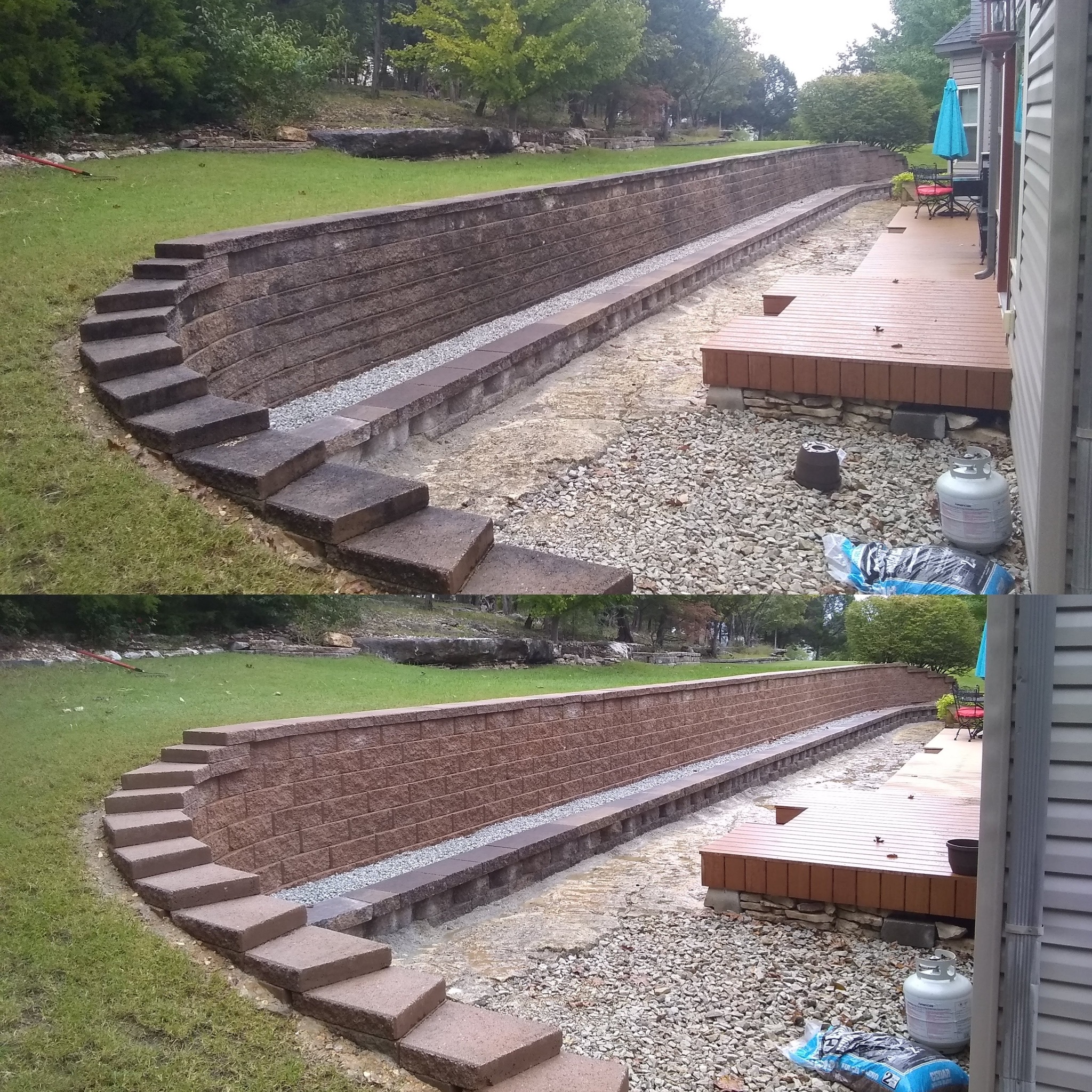


In Springdale, the brick patio that looked sharp the first summer can show its age fast. Weeds creep up between the pavers after a few humid August stretches. Joint sand washes out after one or two pop-up storms off the Ozark Plateau. Pavers near the pool deck wobble underfoot, and old sealers go hazy or chalky after a couple of freeze-thaw winters. None of that means the patio is past saving. The joint sand and the surface need to be rebuilt, not just rinsed off.
That rebuild is what we do at Arkan Softwash. We’re veteran-owned, fully licensed and insured, and Plant and Property Protection Certified through Spray Wash Academy. Our paver sealing service runs as a two-day, two-coat system because the substrate has to be fully dry before sealer goes down. We don’t rush the job, and we won’t push a reseal if your existing sealer is still doing its work.
If your pavers need attention, call 479-877-5399 for a free estimate. Most paver sealing jobs in Springdale start at $300 for small projects, and we walk you through what’s driving your specific quote before you sign anything.

Paver sealing with us starts at $300 for very small jobs and scales from there. We price per job rather than per square foot because real paver projects rarely behave like a clean rectangle on graph paper. A handful of factors do the heavy lifting on your final number:

Two ways to save: a spring promotion that knocks $25 off any two services booked together, and a multi-service discount customized per property across paver sealing, paver cleaning, concrete cleaning, and house washing pairings. Estimates are free either way. About half are built from photos you send us, but paver sealing leans toward an in-person visit because weed severity, sand blowout, and prior sealer are hard to read from a screenshot. Quotes come back by text and email with same-day or next-day follow-up.



Brick is the most common paver material we seal. Most older Springdale patios, walkways, and pool surrounds were built with brick, and brick is porous, so it holds onto organics, faded color, and old sealer in ways concrete doesn’t. The etch-and-bond stage matters more here than on any other surface. Done right, the color comes back with a matte or natural finish, without the high-gloss “wet look” that some homeowners specifically don’t want.

Concrete pavers are our second-most-common material and get the same two-coat system. Stone pavers come in two installation styles: when stone is set in sand, the full paver sealing process applies, and when it’s set in concrete, the job shifts to our concrete sealing process since there’s no joint to rebuild. Travertine is the least common paver we see in this area, but it runs through the same temperature window, dryness requirement, and two-coat application. We confirm which material and install style you have during the Day 1 walk-through.
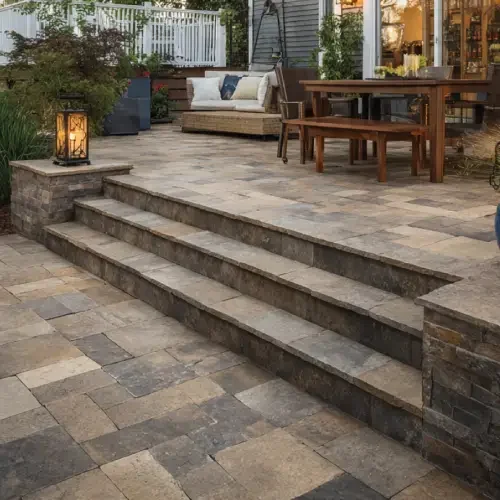
We don’t do meaningful paver repairs or re-leveling. We inspect for cracks and uneven pavers and call them out, but the structural fix on a sunken or broken paver is a different specialty. We also won’t seal pavers below 40°F or above 95°F, and we won’t seal damp pavers just to finish faster. That dry-down delay is the quality control. Skipping it is how sealer hazes, blushes, or peels four months later.

We’re veteran-owned and operated, which shapes how we run: phone answered fast when we can, estimates back quickly with real detail, on-time arrivals, and follow-through on what’s written in the quote. The pattern matters more than the slogan.

Most pavers in Springdale sit right up against the house, garden beds, and landscaping. That’s why our Spray Wash Academy certification shows up in practice. We tape off and cover siding, wrap exposed surfaces with plastic tarps and sheeting, cover plants before any sealer leaves the spray tip, and use neutralizers where pets or sensitive plants could be exposed.

The most common question we hear: what happens to all that sand? The old joint sand has to come out before new sand can go in. If you don’t want that slurry running into your grass or flower beds, we collect the runoff, vacuum it up, and discard it off-property.

We carry both Deco / Deco 20 and Trident sealer products. Sealers are water-based, typically in a matte or natural finish, with a non-slip additive available for pool decks and shaded patios. Two product families on hand means we pick the right one for your paver material, finish goal, and the conditions on the day. We use low-VOC sealers wherever possible.

Paver sealer typically lasts two to five years, with foot traffic and annual maintenance moving the range. We recommend a re-evaluation visit at the three- to four-year mark, not an automatic reseal on a calendar. We test spots on the existing sealer, and if it’s holding up, the answer is to leave it alone.

A one-year satisfaction guarantee covers paver sealing specifically. Our 100% company-wide satisfaction guarantee sits on top of that, written into the contract. If we can’t get you satisfied after a chance to fix it, we refund the job. In the history of the business, we’ve never had to.







Your project starts with a call or an email. We ask the questions that drive the quote: paver type, joint sand condition, prior sealing history, weed situation, and what surrounds the pavers, whether that’s a garden bed, a pool, or siding right up against the work area. That intake is how we figure out if your job is a clean-and-seal or a strip-clean-etch-sand-seal.
About half of our estimates are built from photos and measurements you send us. The other half are done in person, and paver sealing leans that way more often because the price-changing factors are condition-specific. Your quote comes back by text and email. Once you accept, we schedule the job into a weather-appropriate two-day window with a 30-minute heads-up before each crew arrival.
Day 1 starts with a walk of the property to confirm scope and flag cracks, uneven pavers, or anything unusual before we touch a thing. Then we lay down a heavy solution of sodium hypochlorite to treat weeds, moss, algae, and biological staining in the joints. An apple-fragrance surfactant masks the bleach smell so it’s tolerable around the home. If your pavers were sealed before, a sealer stripper goes on next, followed by a pressure-washing pass to clear the old film.
After the cleaning pass, we clear the joint sand with controlled pressure. This is the craft moment of the day. Too much pressure here lifts the paver base and shifts the field, which is the exact structural problem you’re paying us to fix. We use deliberate, low-impact pressure so the old sand comes out and the base stays untouched. An acid etch opens the paver pores so the new sealer can bond, followed by a neutralized rinse. If you don’t want sand-laden runoff in your yard, we vacuum it up and remove it from the property.
Day 1 and Day 2 are split on purpose. Sealing a damp substrate traps moisture under the film and causes haze, blushing, or peeling within months. Spring in Northwest Arkansas can run wet, so this gap occasionally stretches when back-to-back dry days don’t line up. We’d rather hold your job a few more days than burn your sealer with bad weather.
On Day 2, we confirm the pavers are dry and the temperature is in range. The protection routine kicks in: tape and cover siding, wrap with plastic tarps where overspray could land, cover plants in the splash zone. New joint sand goes in next, broomed evenly into every joint. We want even sand depth across the entire field, not heavy in some areas and bare in others.
The first coat goes down across the entire surface, followed by the second. Our quality test: even sand in every joint and even sealer across every paver, with the same amount of product everywhere. Before any invoice goes out, we walk the finished job with you and fix anything that needs another pass right then. The invoice doesn’t get sent until you sign off on the result.
A few days after the job, we follow up by text to make sure the pavers still look the way you wanted. Going forward, an annual soft wash keeps organics off the surface and stretches sealer life. We come back at the three- to four-year mark to test the seal and tell you straight whether resealing is needed yet. If it’s holding up, we leave it alone.
A one-year satisfaction guarantee covers paver sealing specifically, with our 100% company-wide guarantee written into the contract on top of it. You give us a chance to fix any issue before requesting a refund, and if we can’t get you satisfied, we refund the job. We’ve never had to.
The trust foundation is real:
A few honest boundaries: pre-existing paver damage like cracks or uneven settling is documented on Day 1 but isn’t repaired as part of the service, and if another contractor seals on top of our work or touches the surface, the guarantee no longer applies.


Paver sealing with us starts at $300 for very small jobs and goes up from there. The price moves with paver type, joint sand condition, weed severity, and whether the surface was sealed before.
Four to six hours of active labor, spread across a multi-day project. Day 1 is cleaning, etching, and joint clearing. Day 2 is fresh joint sand and the two-coat sealer application, with drying time between. Sealing damp pavers traps moisture under the film and causes haze or peeling later, so the gap is on purpose.
The old joint sand gets flushed out so fresh sand and sealer can lock the pavers in place. If you’d rather not have the slurry run off into your yard, we collect the runoff, vacuum it up, and dispose of it off-property.
Yes. We apply a sealer stripper first, then pressure-wash the surface to remove the old film before running the full cleaning, etching, sanding, and two-coat sealing process. Prior sealer is one of the biggest factors in your final price.
Two to five years, with foot traffic and annual maintenance moving the range. We recommend a re-evaluation visit at the three- to four-year mark, not an automatic reseal on a calendar. We test the existing sealer in a few spots, and if it’s holding up, you leave it alone.
When applied correctly, the products are pet- and plant-safe. We use biodegradable products whenever possible, neutralizers around sensitive plants, and physical barriers like plastic sheeting and plant covers during application.
We use low-VOC sealers wherever possible and water-based products as the default. The sealer lines are Deco / Deco 20 and Trident, with the specific product matched to your paver type and finish goal.
Matte and natural finishes are what we apply most often, because they bring the paver’s color back without the high-gloss “wet look” that some homeowners don’t want. A non-slip profile is also available for pool decks and shaded patios.
Yes. A one-year satisfaction guarantee specifically on paver sealing work, on top of a 100% company-wide satisfaction guarantee written into the contract. We’ve never had to refund a job.
Call 479-877-5399 to get on the schedule before the dry season fills up. We answer the phone, we show up on time, and we don’t send the invoice until you tell us the job looks right.