
Springdale sits on the I-49 commuter corridor and the US-412 trucking route. Those two routes push constant volume through every fueling site in the area. That volume shows up on your canopy as exhaust film and mildew, on your pillars as road grime, and on your concrete pads as petroleum drips, tire marks, and grease bonded into the concrete. Hot, humid NWA summers feed canopy mold, and winter freeze-thaw cycles widen pad cracks so more oil settles in.
Arkan Softwash is a commercial pressure washing specialist serving Springdale and the surrounding Northwest Arkansas region. We are Plant and Property Protection Certified through Spray Wash Academy, fully insured, and our 100% satisfaction guarantee is written into the service contract. Every dispenser on your site is bagged with a heavy mattress protector before any chemical or water touches the property, a protection step most pressure washers skip on a fuel-site visit.
If you run one station or fifteen, call us at 479-877-5399 to set up a site walk-through. We do the work after-hours so your morning rush opens to a clean canopy, degreased pads, and pumps untouched by the cleaning process.

Gas station cleaning starts at $600. That figure covers a standard scope on a smaller station: a full canopy wash, the support pillars, and the concrete fuel pads, with every dispenser bagged for protection before any cleaning chemical hits the site.
To put $600 in context against the rest of our commercial menu, our general commercial minimum is $250, drive-thru cleaning starts at $400, parking lot cleaning starts at $500, gas station cleaning starts at $600, and parking garage cleaning starts at $1,200. Gas stations land in the middle of that ladder for three reasons: bagging and protecting the dispensers, scheduling after-hours, and dealing with petroleum-saturated concrete that cold water won’t lift.
Where a station prices higher than the $600 floor, it usually comes down to:
Final pricing is confirmed on a site walk-through, since canopy size, pump count, and pad condition vary from site to site.

Recurring maintenance plans land at a lower per-visit cost than one-off cleans, and large-scale jobs get a meaningfully lower per-square-foot rate. Multi-service bundles work the same way. Pricing is customized per property rather than published as a flat percentage, and the more services you stack into the same after-hours visit, the better the per-service rate.
We are also running a spring offer right now: $25 off any two services. Mention it when you call and we will apply it to your quote where the scope qualifies. About half of our estimates are pulled together online and half on a site visit, depending on conditions. We send them by text and email and follow up the same day or the next.


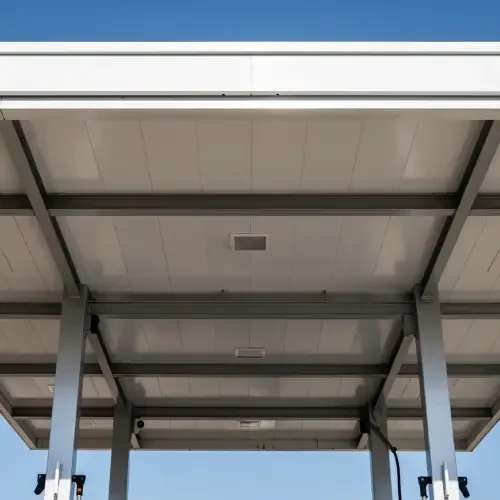
The canopy and its steel support pillars get a detergent-based soft wash, applied with our downstream injector setup. The detergent lifts road grime, exhaust film, mildew, and algae without high pressure, which protects paint, brand decals, and signage from being stripped. We use soft wash here for one reason: we want to clean the surface without disturbing the finishes you paid to put up there.
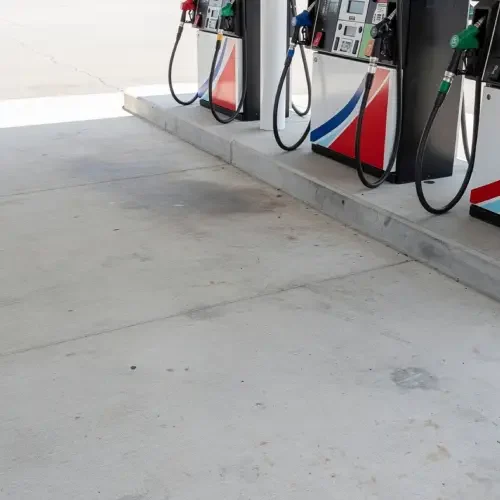
Fuel pads carry the heaviest soil on the property, so they get a heavy degreaser to lift the petroleum and grease bonded into the concrete pores. We then run a surface cleaner at 2,500 PSI or lower for a stripe-free, pit-free finish. For stubborn petroleum that cold water and detergent won’t touch, we deploy our hot water machine, which is the piece of commercial-only equipment that separates a fuel-pad clean from a typical concrete clean.

Where tire marks show up on the pads or at the entry and exit lanes, we add a tire-mark additive to the degreaser. It is the same chemistry we run on drive-thrus and parking lot curb work, and it treats curb lines, entrance ramps, exit lanes, and the painted markings adjacent to your fuel islands.
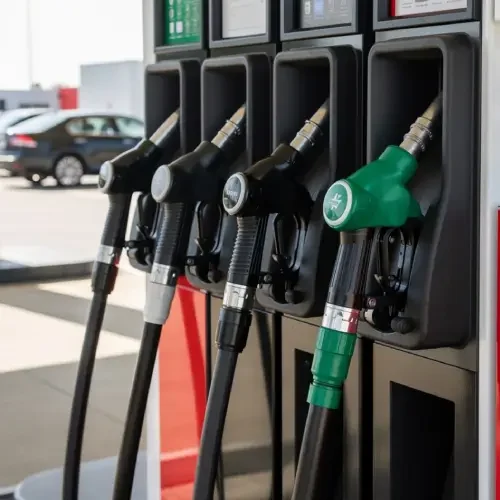
The dispensers stay bagged for the duration of the canopy and pad work, never pressure-washed. The bags are water-resistant plastic sleeves, far heavier than the loose sheeting typical of residential pressure washing, and they keep your dispensers fully isolated from the cleaning process.
If you want the dispenser housings cleaned in addition to the canopy and pads, that is an opt-in hand-detail service. We carefully un-bag each pump after the canopy and pad work is finished, hand-clean the housing, and keep the surrounding protection in place until rinsing is complete. The hand-detail add-on is quoted on-site based on dispenser count.
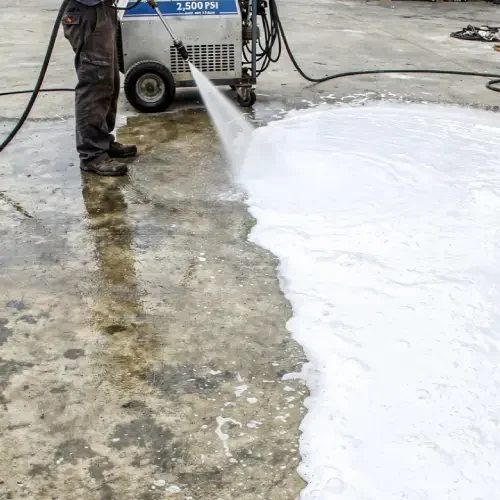
A few hard rules apply to every gas station we clean. Our surface cleaner is capped at 2,500 PSI on commercial concrete, with no exceptions, because anything higher will pit or stripe a fuel pad. Pump dispensers are hand-detailed only, never pressure-washed. Petroleum-laden runoff is captured and routed away from your storm drains using berms, a sludge sucker, and a rented reclamation system when site compliance calls for one. These standards exist so the cleaning protects the assets it is meant to refresh.

Heavy mattress protector bags wrap tight to every dispenser before any water or chemical touches the site, and they stay on through the canopy and pad work. This is the first thing we do on every visit, and it is the move that tells you the crew on your property has thought through the risk on the most expensive equipment on your forecourt.

Once the pumps are protected and the site is closed, our crew runs the canopy soft wash and the concrete degreasing simultaneously. That parallel approach is how we deliver a four-to-five-hour completion window on a smaller station. Larger sites take longer, and we confirm the exact time on the walk-through.

The Spray Wash Academy certification trains contractors to safeguard plants, landscaping, and sensitive property infrastructure during chemical wash work. On a gas station, that translates directly into how we handle perimeter shrubs, mulched islands, edging strips, and the electrical infrastructure of the fuel island. We use neutralizers like agent pink bleach neutralizer where runoff could otherwise reach delicate areas.

We carry insurance for potential damages, and our 100% satisfaction guarantee is written directly into the service contract rather than tucked into fine print or a verbal promise. For commercial buyers comparing crews, having that written commitment on paper before the first visit is a meaningful comfort. The full terms are detailed in the guarantee section further down the page.

Petroleum-laden runoff at a fueling site needs proper containment. We deploy berms or water deterrents to direct runoff toward a safe collection point, a sludge sucker to vacuum captured water away from drains, and we have access to rented reclamation systems for sites with strict storm-drain compliance needs. When questions come up about what is allowed at a specific site, we call the government agencies directly to get a clear answer before the crew rolls in.

Gas station work is done after-hours by default. That protects your fuel sales, removes risk to your customers, and lets the crew run the job without working around incoming vehicles.

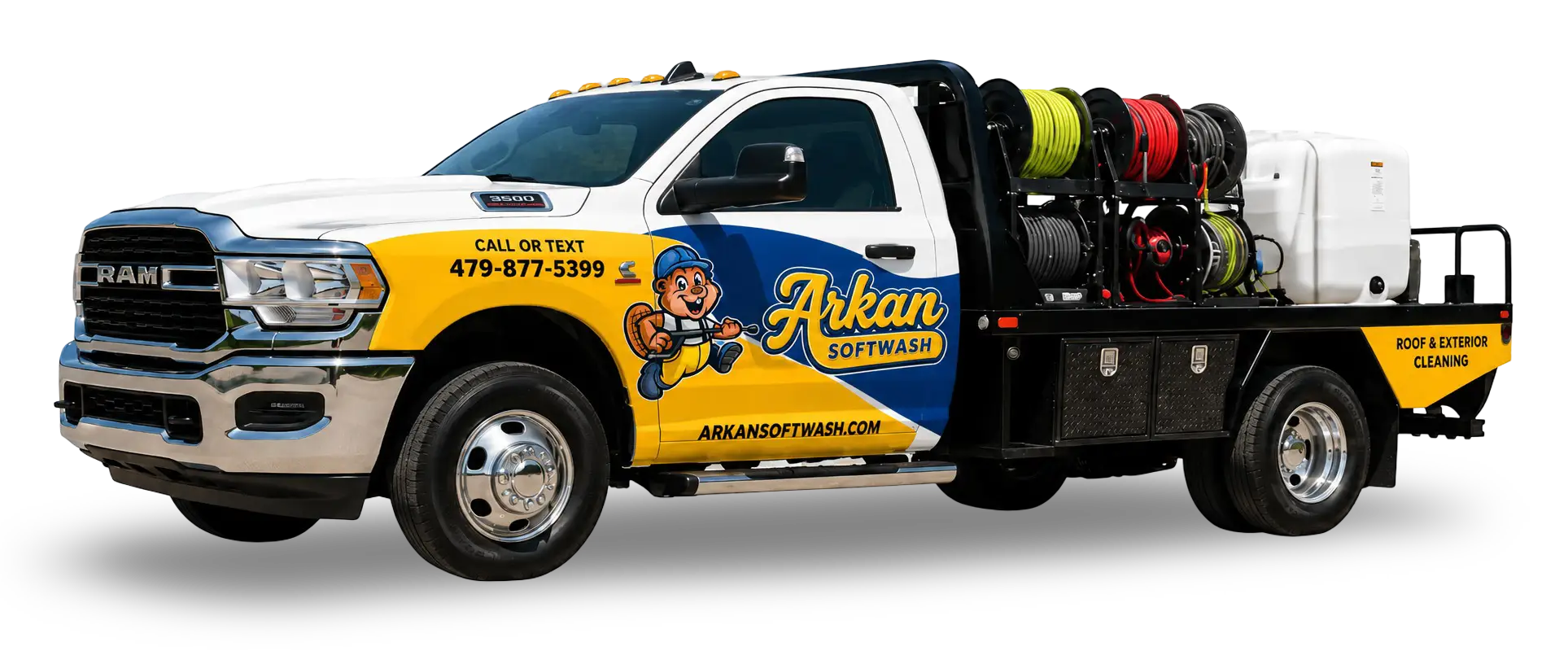
We bring a 12 GPM pressure washer, an 8 GPM pressure washer, a soft wash system with downstream injector, and a hot water machine reserved for commercial petroleum work. Our truck carries a 100-gallon water tank, and we bring rented 500 to 1,000 gallon trailers for stations without a usable spigot or with restricted water access.

We position around thoroughness and follow-through, and we tell you that up front. Our pricing reflects insured crews, real pump protection, runoff containment, and the equipment a fuel site actually requires. If you want a contractor whose quote you can stand behind to your franchisor or property owner, that is the room we play in.

A few business policies stay consistent across every fuel-site customer. Cleaning is performed after-hours by default to protect your fuel sales, with full on-site safety setup on the rare occasions a 24-hour site requires a daytime visit. Reclamation systems are rented in for sites with strict storm-drain compliance, which puts the right equipment on the right job without inflating overhead on simpler visits. Bundle pricing is built around the specific scope of your site rather than a published percentage, so a multi-site operator or recurring customer sees a real number tied to real scope.




We answer the phone live whenever possible. The scoping call covers pump count, canopy footprint, square footage of concrete pads, current pad condition, your preferred service window, water access at the site, and whether you want the dispenser hand-detail add-on. About half of our quotes are pulled together online, the other half in person when the site has unusual conditions or restricted access.
We coordinate the service window directly with the station owner, franchise operator, or property manager. That includes water access, gate codes, and any building-management coordination required for the visit. By default we send a 30-minute heads-up call and text before the crew arrives, and we provide before-and-after photos. Some commercial property managers prefer we skip the heads-up cadence and just show up, do it right, and send the invoice. We adapt to whichever you prefer.
Once the crew is on site, we set up cones, fold-out signs at entrances, caution tape where pedestrian access is possible, strobe lights on the truck, and a spotter near any entrance where someone could come through. Berms or water deterrents are placed to direct runoff toward a safe collection point and away from storm drains. Every dispenser is then bagged with a heavy mattress protector before any water or chemical touches the site, and that bagging step gates the rest of the visit.
The canopy underside and steel support pillars get a detergent-base soft wash applied with our downstream injector. The detergent is allowed to dwell, then rinsed clear. This stage runs at the same time as the pad cleaning below, which is how we keep the total job inside that four-to-five-hour window on a smaller site.
Heavy degreaser goes onto the concrete pads to break down petroleum and grease bonded into the pores, with the tire-mark additive blended in for areas with rubber buildup. The surface cleaner runs at 2,500 PSI or lower for a stripe-free finish, and the hot water machine comes out for stubborn petroleum. The sludge sucker captures and routes contaminated water to a safe collection point throughout the stage, and a rented reclamation system runs when the scope requires it. A flush rinse closes out the pad work.
If you have opted into the hand-detail add-on, this is where it happens. We carefully remove the protective bag from each dispenser, hand-clean the housing, and keep the surrounding protection in place until rinsing is complete on the adjacent pad.
We walk the property with you or the property manager before the crew leaves, and anything flagged on-site gets handled immediately, before we pack up. The invoice is sent right after the walk-through is approved. A thank-you text follows shortly after, along with a review request directed primarily to Google.
For high-traffic fueling sites, recurring service is the most cost-effective option once the first deep clean is complete. Common companion services we add to recurring commercial plans include building wash, window cleaning, dumpster pad cleaning, and concrete sealing of the fuel pads. Our concrete sealing service starts at $300 and includes acid-etching the concrete to remove pore contaminants and a two-coat sealer application, applied only when the temperature is between 40°F and 95°F.
Every gas station cleaning we do is covered by insurance and a 100% satisfaction guarantee written directly into the service contract. The clause works both ways: you give us the chance to come back and address any issue first, and if we cannot get it resolved, the job is refunded. We have never had to issue a refund, and that written commitment is what gives commercial buyers the confidence to bring us in on the first visit.
Anything raised after the invoice triggers a return visit handled on our time. The guarantee covers our workmanship, with any pre-existing surface conditions on the canopy, pillars, or pads noted on the walk-through before any work begins, so the final inspection has no surprises for either side.


No, not by default. Gas station cleaning is performed after-hours when the station is closed, which protects fuel sales, removes risk to customers, and lets the crew work without interruption. If your site is 24-hour and there is no alternative, we set up cones, fold-out signs, caution tape, strobe lights on the truck, and a spotter near entrances to keep the public safely routed around the work area.
No. Every dispenser is draped with a heavy mattress protector bag before any water or chemical touches the site. The bags are water-resistant and stay on the pumps for the full canopy and concrete cleaning process. The pumps themselves are never pressure-washed.
Gas station cleaning starts at $600. That covers the canopy, the pillars, and the concrete fuel pads with pumps bagged for protection. Final pricing depends on the size of the station, the severity of petroleum staining on the pads, whether you add hand-detail cleaning of the pumps, the after-hours work window, and whether you bundle other services into the same visit. Final pricing is confirmed during the on-site walk-through.
Yes, as an opt-in add-on. The dispenser housings are hand-detailed and never pressure-washed. The protective bag is carefully removed from each dispenser, the housing is hand-cleaned, and any remaining protection stays in place until rinsing is complete. The hand-detail add-on is quoted during the site walk-through.
For a smaller station, four to five hours. Larger sites take longer, and the exact time is confirmed during the on-site walk-through.
No. The surface cleaner is run at 2,500 PSI or lower with controlled movement, which produces a stripe-free, pit-free finish on commercial concrete. We have cleaned hundreds of commercial concrete pads at this point with no striping issues.
Petroleum-laden runoff is captured and routed away from storm drains on every visit. The crew sets up berms or water deterrents to contain runoff, uses a sludge sucker to vacuum captured water to a safe collection point, and arranges a rented water reclamation system when the scope requires it. If your site has strict storm-drain compliance requirements, that is discussed and arranged ahead of time.
Yes. We carry insurance for potential damages, and the 100% satisfaction guarantee is written into the service contract.
Yes. We serve Springdale, Rogers, Tontitown, and the surrounding Northwest Arkansas region.
Recurring maintenance plans and multi-site bundles get materially better pricing than one-off jobs. Pricing is customized per property and per scope rather than a flat published percentage. A station owner with multiple locations or a willingness to commit to recurring cleans gets stronger pricing than a one-time call.
Yes. Common commercial bundles include dumpster pad cleaning, drive-thru cleaning if applicable, building wash, sidewalk cleaning, and concrete sealing of the fuel pads after a deep clean. The more services you stack into the same after-hours visit, the better your per-service rate. Concrete sealing of the fuel pads starts at $300, includes acid-etching and a two-coat sealer application, and is only applied when the temperature is between 40°F and 95°F.
Yes, when needed. The truck carries a 100-gallon water tank, and the team can bring rented 500 to 1,000 gallon water trailers for stations without a usable spigot or with restricted water access.
We answer the phone live whenever possible. About half of estimates are gathered online and half in person depending on site conditions. Estimates are delivered by text and email, with same-day or next-day follow-up.
The $25 off any two services spring promotion was introduced as a general company offer. Mention it on the quote call so we can apply it where your scope qualifies, since commercial bundle pricing is customized per property.
When you are ready to put a number on your forecourt, call Arkan Softwash at 479-877-5399 to set up an on-site walk-through, or send the basics by text or email and we will run an online estimate first. We work after-hours so your station stays open and earning while the cleaning crew handles the canopy, pillars, and pads. We are insured, contracted, and backed by a satisfaction guarantee that has yet to trigger a refund.