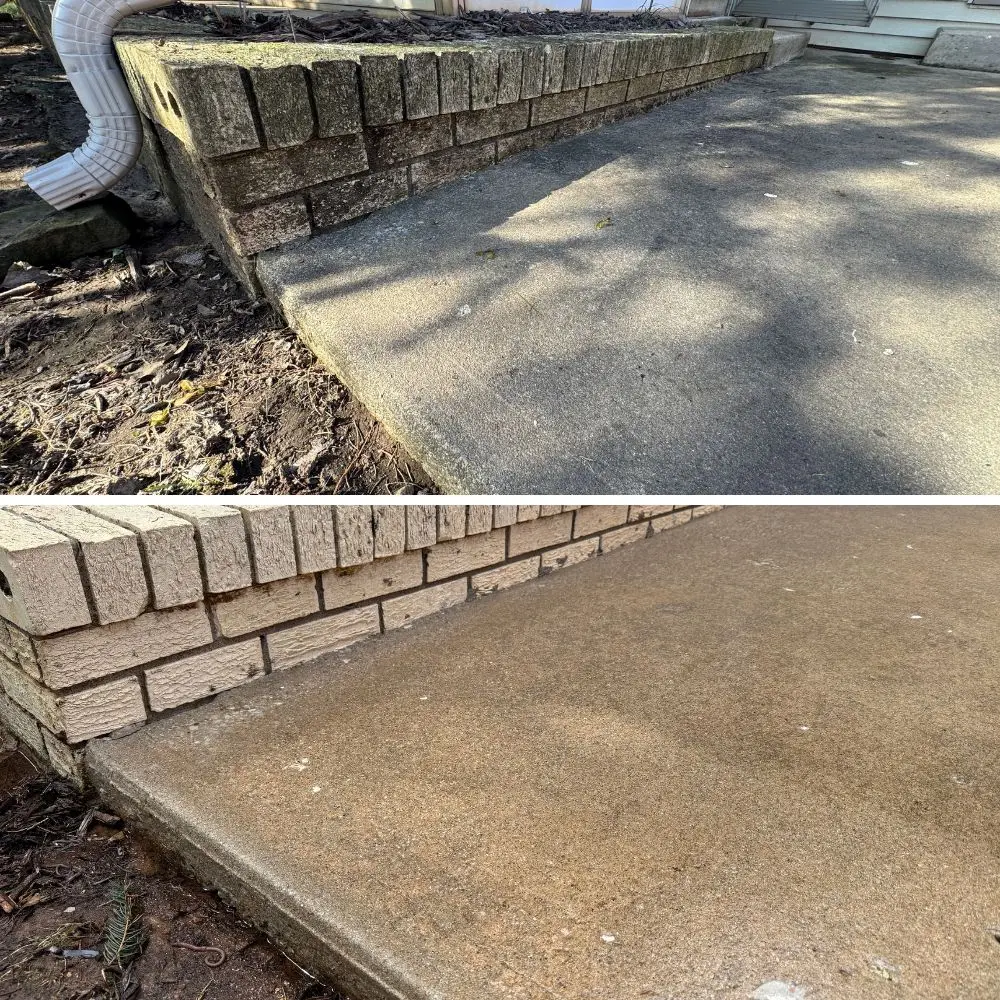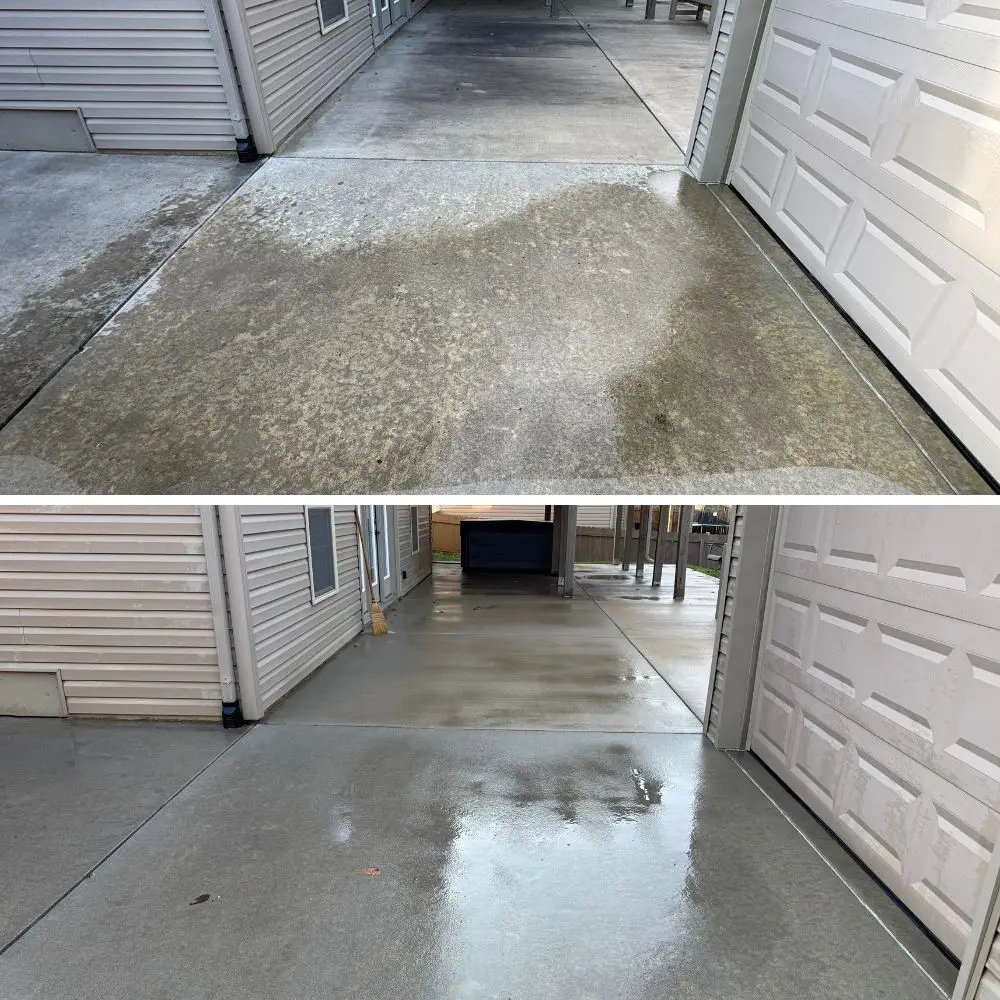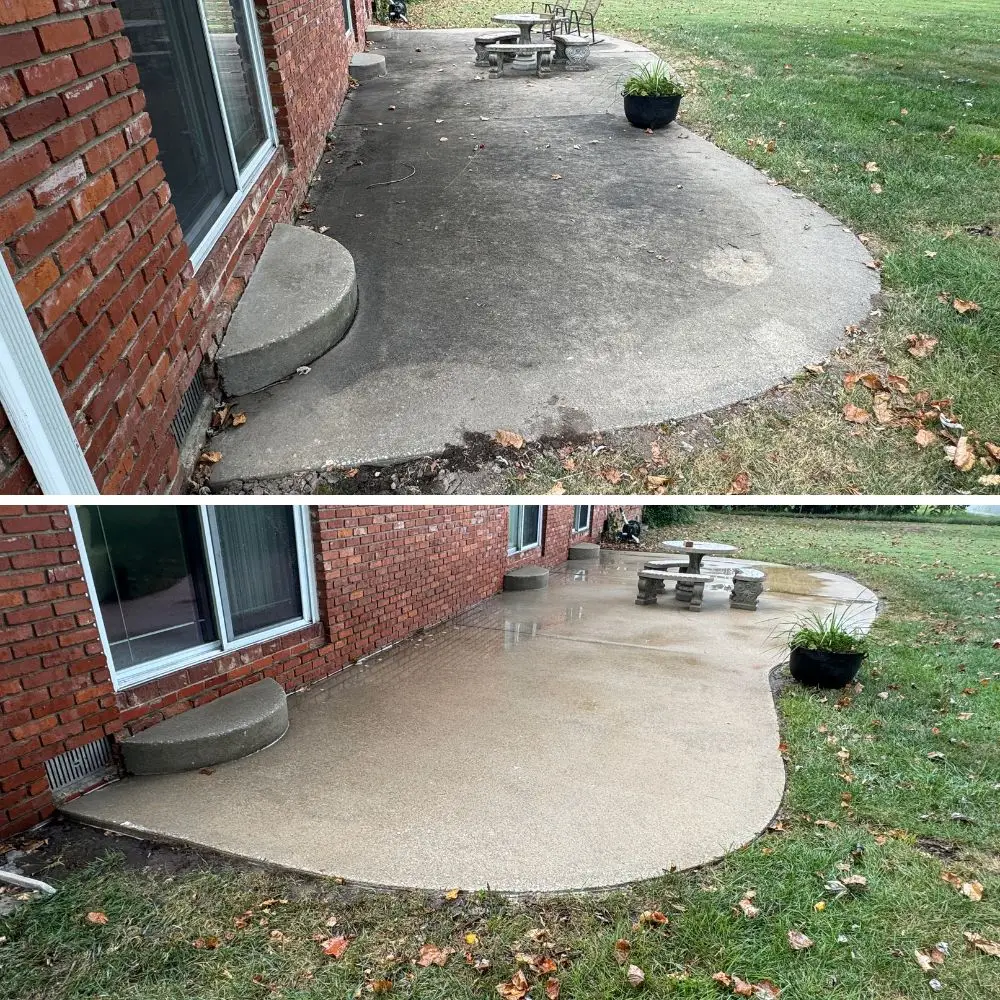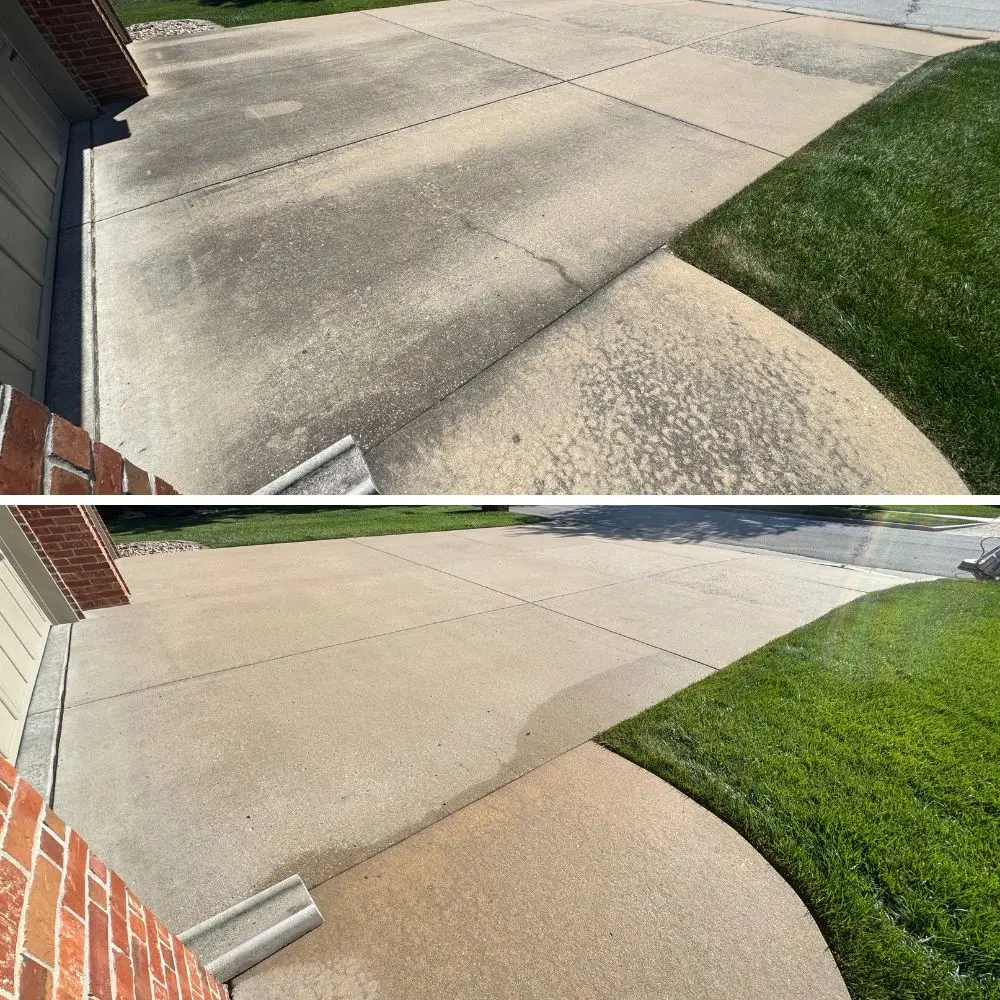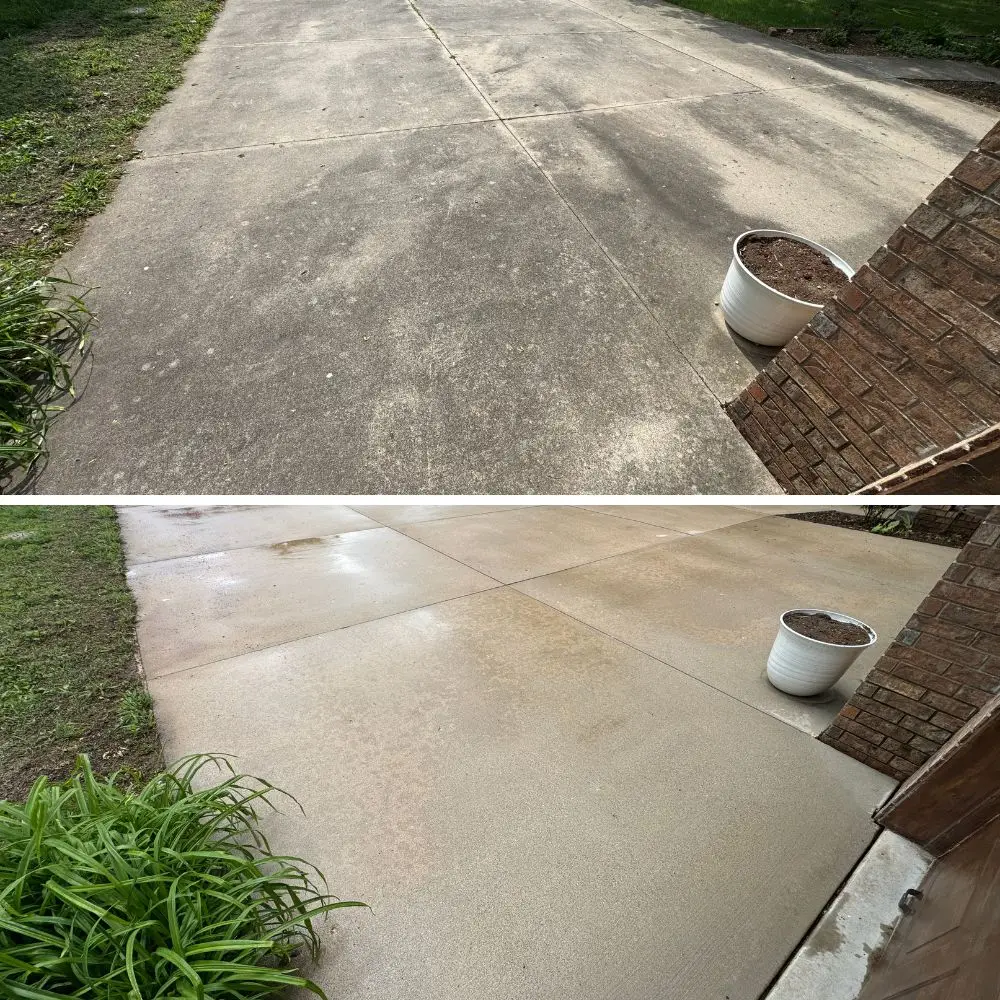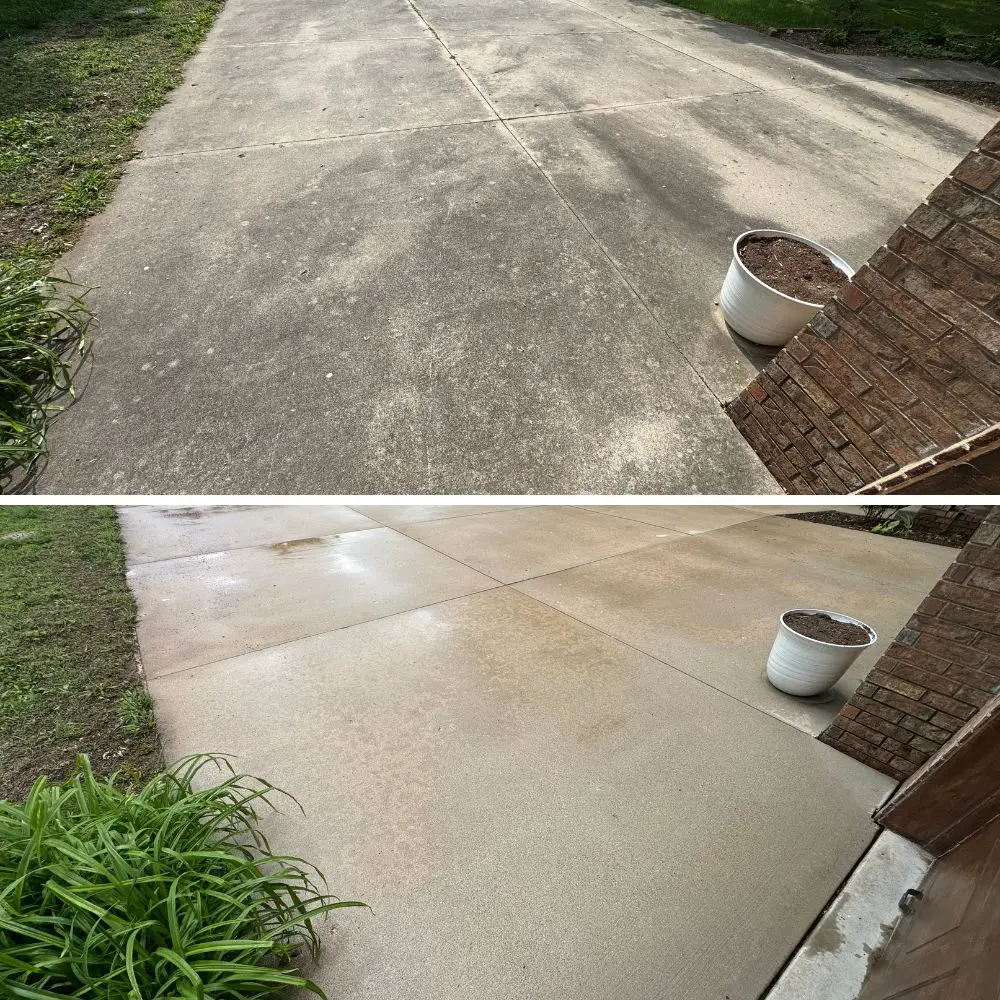

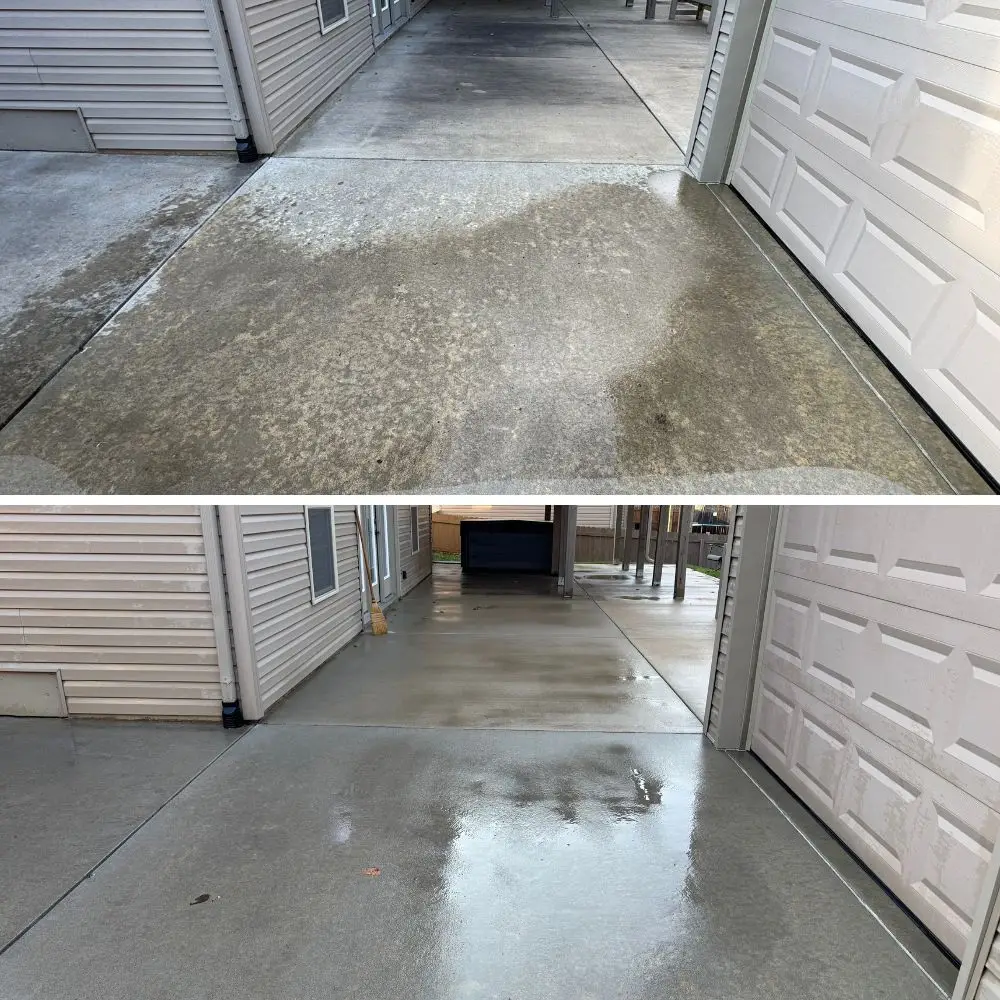
Springdale concrete takes a beating. Older sidewalks in established neighborhoods sit alongside newer flatwork in Rogers, Bentonville, and Tontitown subdivisions, almost all of it under heavy tree coverage. Leaves, acorns, and berries leave brown and reddish tannin staining across driveways and pool decks by the end of fall, and a wet, pollen-heavy spring brings the gray-green film of algae and mildew right behind it.
At Arkan Softwash, every job starts with a diagnostic phone call, runs through a surface cleaner held at 2,500 PSI or lower, and finishes with a full walk-around before any invoice goes out. We’re Plant and Property Protection Certified through Spray Wash Academy, fully licensed and insured, and we’ve cleaned hundreds, if not a few thousand, driveways across Northwest Arkansas without striping issues. For homeowners who’ve ended up with zebra lines from a cheaper pressure washer, that track record is the difference.
Call us at 479-877-5399 for a free estimate, and we’ll walk you through exactly what we see on your concrete before quoting a price.
Driveway cleaning and concrete cleaning are the same residential service in our world, but the workflow changes depending on what your surface is made of.
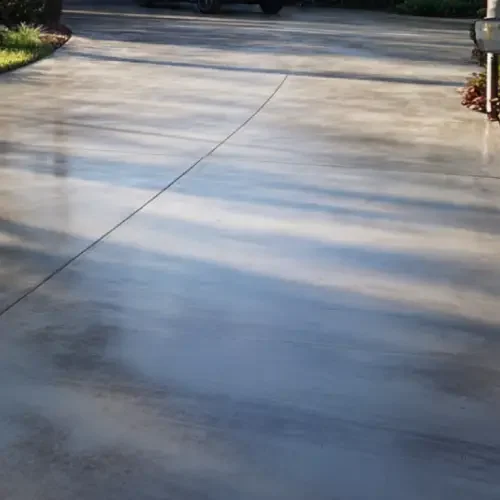
The workflow is identical across standard concrete. A sodium hypochlorite pretreatment kills algae, mildew, and the gray-green film at the source, the surface cleaner runs at 2,500 PSI or lower, a flush rinse clears everything off, a post-application chemical finishes the job, and we neutralize at the end. Runoff is heavily diluted near plants and pets, and Agent Pink, a bleach neutralizer, goes onto adjacent landscaping. On pool decks the 2,500 PSI ceiling matters because older or textured surfaces etch and fuzz under high pressure.
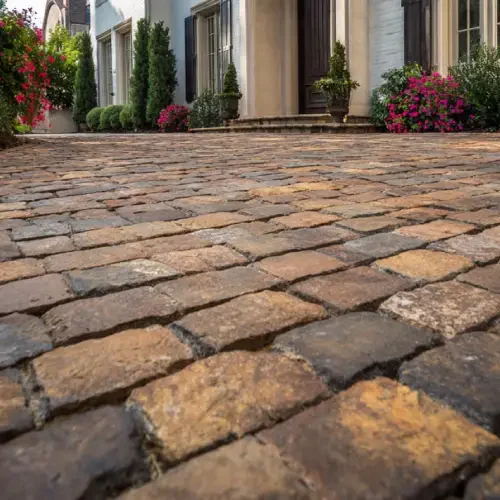
Pavers get a heavy sodium hypochlorite soak and a soft-wash rinse if you’re not re-sanding, or the standard concrete process if they’re being prepared for fresh sand and a new sealer. Stone is sorted by setting bed: stone in concrete follows the concrete process, stone in sand follows the paver process. Asphalt calls for its own approach: we apply Dragon Juice, an asphalt-safe biodegradable degreaser, and soft-wash rinse, which keeps the binder intact and the surface protected.
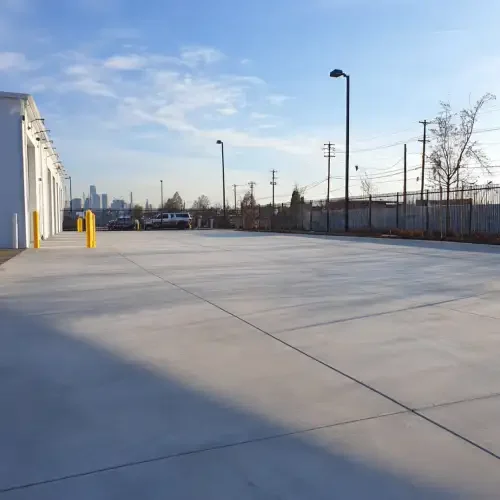
We also clean drive-thrus, parking lots, parking garages, gas station pads, and storefront concrete. Drive-thrus run a heavy degreaser with a tire-mark additive blended in for rubber streaks on curbs, done when the restaurant is closed. Parking garages add rust treatment and runoff management with berms and a sludge sucker, or a rented reclamation system when needed. Gas station pads get a heavy degreaser with a hot-water machine. Every commercial job runs with cones, fold-out signs, caution tape, strobe lights, and a spotter at active entrances.
There’s a real difference between a contractor with a wand and a yard-sign ad and a crew built for concrete. Here’s where it shows up.

We’ve cleaned hundreds, if not a few thousand, driveways across Northwest Arkansas without striping issues. Volume of experience translates directly into consistent results. Operators who have only run a few dozen jobs are still learning how their surface cleaner behaves on different concrete ages, porosities, and slopes. That learning happens on our customers’ driveways once, not every time.

A truck with one bottle can only charge for one kind of clean. Ours carries multiple degreasers for different oils and stain ages, an F9 product for rust, an acid-based treatment for tannin, sodium hypochlorite for the standard organic film, Dragon Juice for asphalt, and a tire-mark additive for commercial rubber streaks. That’s the kit that lets us actually solve what’s on your slab, not just rinse the top layer.

We’re Plant and Property Protection Certified through Spray Wash Academy. In practice, that means runoff is heavily diluted and neutralized anywhere plants or pets may be present, Agent Pink goes onto landscaping near treated concrete, and adjacent siding gets taped and tarped before any vertical chemical application. If you’ve ever asked whether the cleaning is safe for your dog, your grass, or your garden, the certification is the answer.

We’re fully licensed and insured. We’re also straightforward about chemistry: our cleaners can have an effect if used improperly, and we neutralize and dilute aggressively because of it. If we see deep cracks, pitting, or anything out of the ordinary on your concrete, we flag it before we quote. Concrete cleaning is designed to lift staining and organic buildup, so we tell you up front what the chemistry will do for your slab and what falls outside the scope.

Not every driveway is the same surface. Asphalt gets Dragon Juice and a soft-wash rinse. Sand-set pavers get a heavy sodium hypochlorite soak and a soft rinse. Pavers being re-sealed get the concrete process with sand flushing. Stone is sorted by setting bed before anything else is decided. Knowing what you’re working on is what keeps a clean from turning into damage.

Roughly half of our estimates run online, half run in person. Online estimates are pulled from satellite measurements and are accurate enough for standard cleans that we’ve never had to revise one. In-person estimates are reserved for jobs with oil, rust, or tannin so the price reflects what’s actually there. You get a fast quote when the job is simple and a full walk-through when the staining changes the chemistry, with no surprise upcharges either way.

We work across Springdale, Rogers, Bentonville, Tontitown, Fayetteville, and the rest of a 25-mile radius, and we know both ends of the local market. Long driveways, multi-section patios, and pool decks on the large estates in the Walmart corporate corridor are routine for us, and so are dense subdivisions and HOA neighborhoods. We know the wet, pollen-heavy springs and the leaf-heavy falls that drive most of the tannin and organic staining homeowners deal with. Ryan started in the Springfield and Branson, Missouri markets over a decade ago and brought those same standards to Northwest Arkansas.

We don’t market on price. The number on your quote reflects the diagnostic call, the right chemistry per stain, the surface cleaner at 2,500 PSI or lower, the multi-stage process, the Plant and Property Protection certification, the walk-around before any invoice, and the satisfaction policy that keeps us honest. For the homeowner who has been burned by a wand-line job before, that’s the answer.





You reach us by phone or email, and we ask whether you’re dealing with a regular clean or oil, rust, or tannin staining. Standard cleans get a free quote from satellite measurements by text and email. Staining jobs get a free in-person walk-through where we flag deep cracks, pitting, or anything out of the ordinary before quoting.
Once you accept, we set the appointment. We can clean concrete in just about any weather except a downpour, and higher wind is fine because the team works on the ground. On the day of service, you’ll get a phone call and a text message thirty minutes before the crew arrives.
We place cones for hose visibility, pull the water hose to fill the onboard tank, take before pictures, and flag anything that has changed from the estimate before chemicals go down.
If your job involves staining, this is where it’s handled. Oil stains get the right degreaser for their age. Tannin gets the acid-based treatment that creates the two-stage workflow. Rust gets the F9 product, with three to five applications planned for deep staining. Standard cleans skip this step.
A sodium hypochlorite pretreatment kills the organic film at the source. We give it time to dwell, run the surface cleaner at 2,500 PSI or lower, then complete a full flush rinse. A post-application chemical finishes the clean, and only then do we neutralize, with Agent Pink protecting plants and delicate surfaces nearby. Running the steps in this exact order is what keeps the chemistry effective and your landscaping safe.
When the work is done, we walk the property with you. Anything you want re-treated gets handled on the spot, and the invoice only goes out once you’ve confirmed the result in person. A follow-up text checks in a day or two later, and a second follow-up goes out before any review request.
Our satisfaction policy is built into how every job runs, not bolted on at the end. The crew walks the property with you when the work is done, any spot you want re-treated gets handled on the spot, and the invoice is sent only after you’ve confirmed the result. Two follow-ups after the invoice catch anything that surfaces once we leave. We’re fully licensed, fully insured, and Plant and Property Protection Certified through Spray Wash Academy. A few things worth knowing:


Not with us. We use a surface cleaner instead of a pressure-washer wand, which spreads pressure evenly across a rotating bar inside an enclosed shroud. That’s what eliminates the zebra lines cheaper operators leave behind. We’ve cleaned hundreds, if not a few thousand, driveways across Northwest Arkansas without striping issues.
Residential concrete cleaning starts at $100. Your final price depends on square footage, location, ease of access, how dirty the concrete is, and whether specialty stain removal is needed for oil, rust, or tannin. For pricing on your specific property, call 479-877-5399 for a free estimate.
A typical residential driveway clean takes about two hours on site. Jobs with specialty staining or large flatwork, like a driveway combined with sidewalks, patios, and a pool deck, can take longer.
Yes. We use an F9 product, which is the industry standard for irrigation rust, fertilizer rust, battery acid, and metal-leach stains. It’s a spray-on application that we occasionally brush in. Deep staining may require three to five applications to fully break down, and we’ll tell you that up front.
Tannin stains are the brown or reddish discoloration left by leaves, acorns, and berries sitting on concrete. They’re extremely common across Northwest Arkansas after a leaf-heavy fall or a wet spring. We treat tannin staining with an acid-based pretreatment that creates a two-stage cleaning: the stain treatment first, then the standard concrete wash.
Yes. We’re Plant and Property Protection Certified through Spray Wash Academy. We heavily dilute and neutralize all chemical runoff in any area with plants or pets, and we apply Agent Pink, a bleach neutralizer, to landscaping near treated concrete. Our chemicals can have an effect if used improperly, but we neutralize aggressively to prevent that.
Yes. Concrete cleaning is offered as an add-on whenever we’re already on the property for another service. Bundling it with a house wash, roof clean, window cleaning, or storefront cleaning also qualifies you for our multi-service discount, which is customized per property.
Yes. Pool decks follow the same standard concrete cleaning process, including the sodium hypochlorite pretreatment, the surface cleaner at 2,500 PSI or lower, the flush rinse, the post-application, and final neutralization. We’re careful around plants, pool equipment, and the pool itself.
We can clean concrete in just about any weather except a downpour, since heavy rain dilutes the chemicals before they can work. We can even clean in higher wind situations because the team is working horizontally on the ground. Concrete sealing has tighter constraints: we can’t seal under 40°F or over 95°F, and the slab has to be fully dry first.
An annual cleaning is consistent with how we maintain other exterior surfaces in Northwest Arkansas. Driveways under heavy tree coverage, pool decks, and high-traffic patios may benefit from cleaning every spring or every fall to keep organic buildup, tannin staining, and algae from setting in.
If your driveway is collecting tannin staining ahead of fall, your patio is getting ready for the next round of cookouts, or your pool deck is due before the weather turns, this is the right time to get an honest quote on the table. Call us at 479-877-5399 for a free estimate.